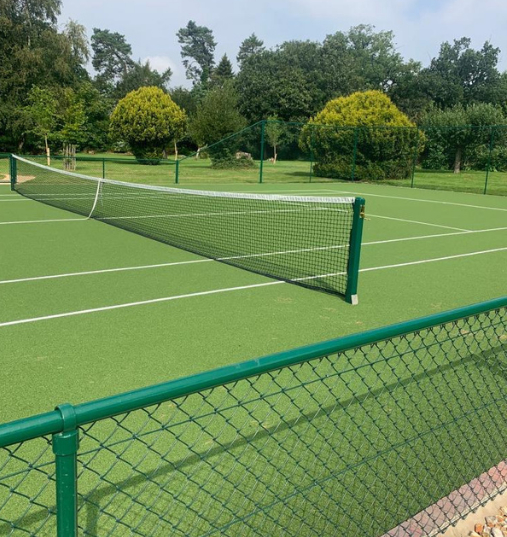
A well-constructed tennis court is a valuable feature for both private and shared spaces, offering a dedicated area for sport, leisure and long-term use. However, like any outdoor surface, tennis courts are subject to wear over time. When signs of deterioration begin to appear, property owners are often faced with an important decision: should the court be refurbished, or is it more appropriate to build a new one?
For clients in Hampshire, UK, understanding the difference between refurbishment and full reconstruction can help ensure the best outcome for performance, safety and longevity.
Understanding Court Refurbishment
Refurbishment focuses on restoring the existing court surface and improving its condition without removing the entire structure. This typically involves repairing surface damage, improving drainage performance and refreshing the playing surface.
Common refurbishment work may include:
- Repairing cracks or surface imperfections
- Recoating or resurfacing the court
- Repainting lines and improving visibility
- Addressing minor drainage issues
Refurbishment is often suitable when the underlying base of the court remains stable and structurally sound.
When Refurbishment Is the Right Choice
Refurbishment is generally recommended when the court shows signs of wear but is still fundamentally intact. Indicators that refurbishment may be sufficient include:
- Surface cracks that are limited and manageable
- Fading or worn coatings affecting appearance
- Slight unevenness that does not impact structural stability
- Reduced grip or playability on the surface
In these cases, restoring the existing court can significantly improve both performance and visual appeal without the need for a full rebuild.
Signs That a New Court May Be Required
In some situations, the condition of the court may go beyond what refurbishment can effectively resolve. Structural issues beneath the surface can affect the long-term performance of the court and may require a more comprehensive solution.
Signs that a new court may be more appropriate include:
- Widespread cracking across the surface
- Significant subsidence or movement in the base
- Ongoing drainage problems that cannot be corrected at surface level
- Repeated need for repairs with limited long-term improvement
When these issues are present, building a new court allows for a fresh foundation and a more reliable playing surface.
The Importance of the Court Base
The condition of the base beneath the surface is one of the most important factors in deciding between refurbishment and reconstruction. Even if the surface appears worn, a strong and stable base can often support refurbishment.
However, if the base has deteriorated or shifted, resurfacing alone will not provide a lasting solution. In such cases, rebuilding the court ensures that the structure is properly supported and able to perform consistently.
Improving Performance and Playability
Both refurbishment and new construction aim to enhance the playing experience. A well-maintained or newly built court offers:
- A smooth and even playing surface
- Reliable ball bounce and grip
- Improved drainage and usability in varying conditions
- A clean and professional appearance
Choosing the right approach ensures that the court meets these standards for years to come.
The Value of Professional Assessment
Determining whether to refurbish or rebuild requires a detailed assessment of the court’s condition. Professional specialists can evaluate both the surface and the underlying structure to recommend the most suitable solution.
At Tennis Court Construction Hampshire, we provide expert assessment and construction services for courts across Hampshire, UK. Our approach focuses on delivering long-lasting results tailored to the specific condition and use of each court.
Planning for Long-Term Use
Whether refurbishing or building a new court, the goal is to create a surface that remains reliable over time. Careful planning and professional workmanship ensure that the court continues to perform well with regular use.
Routine maintenance following the work will also help preserve the condition of the court and reduce the need for future repairs.
Conclusion
Deciding whether to refurbish or build a new tennis court depends on the condition of the surface and the stability of the underlying structure. Refurbishment is often suitable for courts with minor wear, while more extensive damage may require full reconstruction.
For clients in Hampshire, UK, professional assessment is key to making the right decision. Tennis Court Construction Hampshire offers expert guidance and high-quality services to ensure your court is restored or rebuilt to a standard that supports performance, durability and long-term enjoyment.
Call us on: 01264 312395
Click here to find out more about Tennis Court Construction Hampshire
Click here to complete our contact form and see how we can help with your courts needs.